They didn't succeed

The Oxford English Dictionary defines “parody” as “imitation…with deliberate exaggeration for comic effect.” Think the 1980 spoof comedy “Airplane!” or “Monty Python and the Holy Grail.” Think “Shaun of the Dead”; “Austin Powers”; “MadTV” and “Saturday Night Live”. Imitation with deliberate exaggeration for comic effect. I wonder if you’ve ever thought about Palm Sunday as a parody? Jesus’ triumphant entry into Jerusalem, a deliberate exaggeration and imitation of the Roman governor’s own triumphant entry, all for comic effect.
In Jesus’ time, the Roman governor of Judea would ride into Jerusalem before the Jewish Festival of Passover just to ‘keep an eye on things’. The Roman governor in the early part of the common era was a man named Pilate. He had a seat in the Antonia Fortress, next to the Jewish Temple of the Mount. Knowing that Passover was a time when the population in Jerusalem would swell to some 200,000 people, Pilate would make his way through the city riding in on a white stallion, surrounded by his “entourage of Roman officers, jesters, cooks, cup bearers, and lackeys.” People, young and old, rich and poor, lined the streets to witness the procession. Author Marcus Borg describes it as “cavalry on horses, foot soldiers, leather armor, helmets, weapons, banners, golden eagles mounted on poles, sun glinting on metal and gold . . . the [sounds of] marching…feet, the creaking of leather, the clinking of bridles, the beating of drums.”
Taking the coats off their own backs and pulling out costly palm branches cut from their own farms, the people lining the streets laid a path for this great parade, some say as a sign of respect, others, well, we’ll get to that in a moment.
Imagine that one year, the governor’s triumphant entry goes terribly wrong. Instead of greeting the caravan of imperial power at the west gate, people are lining the streets across town at the north end, laying down their cloaks and branches for a ‘nobody from Nazareth’ named Jesus. As one preacher put it, Jesus’ entourage isn’t so much a caravan as it is a carpool: women, men, and children; fishermen, farmers, and Samaritans—all hitching a ride. And, wouldn’t you know, Jesus’ ride isn’t a white stallion, but a donkey and her colt, tied together in a makeshift chariot. I don’t know if you’ve ever tried to ride a young donkey? I imagine it wasn’t easy. I imagine the colt’s mother wasn’t all that happy about it either. Instead of the smooth, ordered ride of a trained war horse, Jesus comes in on not one, but two “bucking and balking” donkeys!
What’s more, while Pilate and his crew are on the west side of town preparing to make their way to the north, Jesus’ procession starts in the north. Pilate arrives at the fortress only to find that a) the streets that were meant to be lined for him have been lined for Jesus; and b) that Jesus had taken a shortcut!
Jesus’ triumphant entry into Jerusalem is a parody, the whole thing a mockery of powers which claim the chief end of humankind to be the glorification of violence and the enjoyment of greed, a mission Jesus categorically resists.
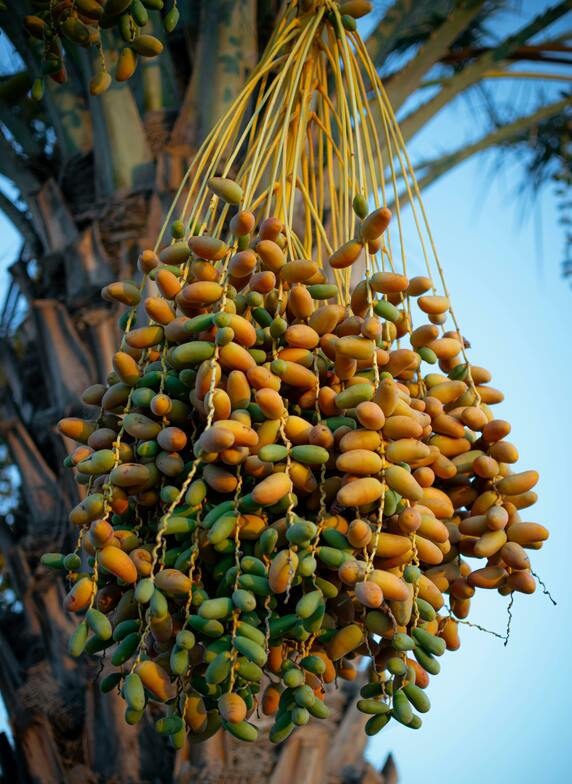
But, what of the coats and branches the people lay before Jesus? If they were used to laying them before Pilate, why not lay something different for the Messiah? Scholars suggest the branches are from date palm trees, which were incredibly valuable. They belonged to, were grown and cared for by farmers working the land occupied by the Roman empire. Some say laying them down for the Roman governor was no sign of respect, but a subversive act. Sure, Pilate was in power for now, but the palm branches represented land that had been around since time immemorial. Pilate was but a moment.
So, for the first time, these farmers and foreigners, these so-called outcasts and sinners lay down their coats and branches not for their oppressor, but for someone who had been raised up beneath these very branches, someone they had come to call Saviour. And, in case the symbolism of date palms wasn't poignant enough, listen to what the historian Josephus had to say about the siege of Jerusalem and the destruction of the Second Temple 40 years after Jesus. Josephus recounts the Roman military cutting down the forest of date palms seven miles wide along the Jordan River valley, attempting to eradicate the cultural and economic identity of entire people groups native to the region. The destruction of the trees was a kind of crucifixion of the land: date palm trees are about eighty feet tall, so you can imagine what it took to cut down those trees!
Because of the destruction of the forest, and a 60 year drought that followed, date palms became extinct by the Middle Ages. Except—get this—they didn’t actually succeed in getting rid of the trees. In the 1960s, during the excavation of Herod the Great’s palace, a group of archaeologists recovered a jar of well-preserved date pits. Carbon dating placed them from between 155 B.C.E to 64 C.E. The 2000-year-old seeds were stored for 40 years until an Israeli and Palestinian-led research institute “harvested [the] ancient dates in the culmination of an ambitious, decades-long experiment to raise the biblical-era . . . date palm[s] — from the dead.”
Dates were harvested from these trees as recently as September of last year.
Imagine a jar of pits coming to produce fruit again after they were thought to be wiped from the face of the earth? Imagine a man riding into a cosmic battle of good and evil on a donkey? Imagine God-made-human rising from the dead after he had been crucified?
Works referenced
Barrett Owen, “Re-imagining Palm Sunday: Jesus - and Pilate - enter Jerusalem” in Baptist News Global. 2019. Accessed online March 29, 2026 l.
Bill Wylie-Kellerman, “Into the thick of the palms” in Wild Lectionary. 2024. Accessed online March 29, 2026.
Laurel Dykstra, “A chorus of beings: liturgy of the branches” in Wild Lectionary. 2025. Accessed online March 29, 2026.
Marcus J. Borg and John Dominic Crossan, The Last Week: What the Gospels Really Teach About Jesus’ Final Days in Jerusalem. HarperOne. 2007.
Read more about the ancient date palms at the Arava Institute