Proximity

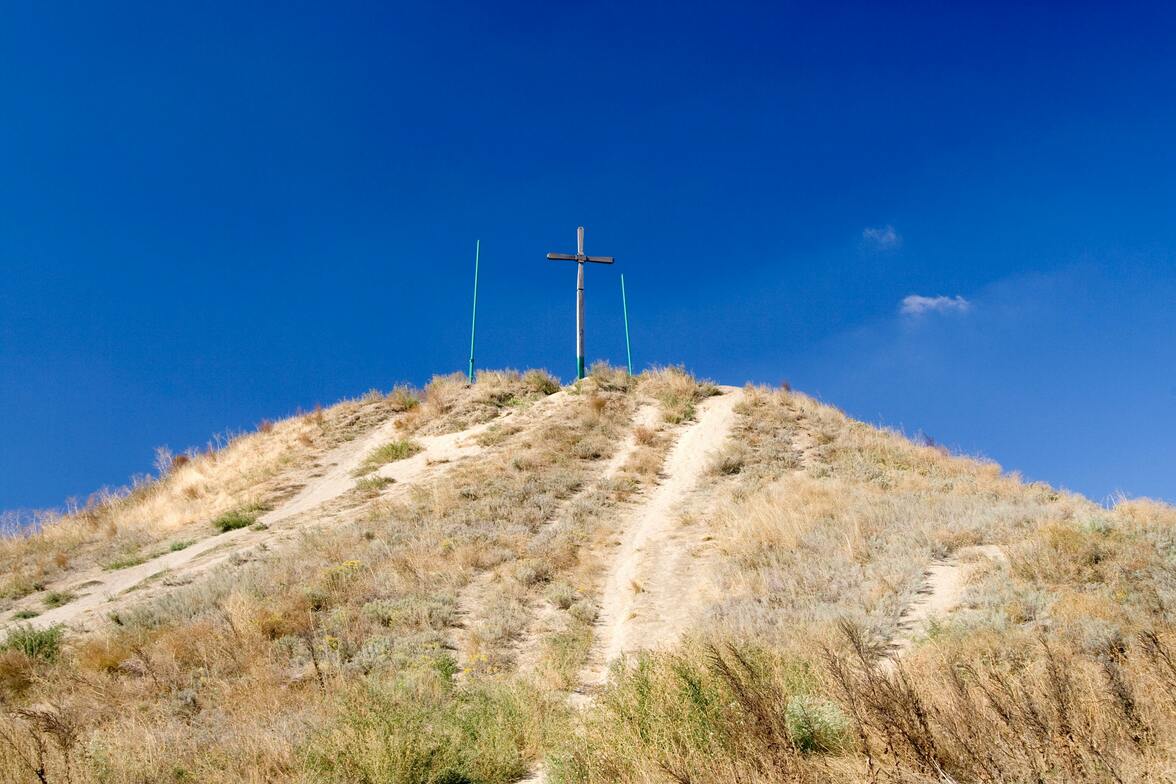
As I listen again to the Good Friday gospel, I am struck by the proximity of things. Words like “near”, “beside”, and “nearby” stand out to me. This is a story where over and over again we are invited to notice just how up close were the people, places, and things surrounding Jesus’s crucifixion. The family members who witnessed Jesus’ death were all “standing near to the cross”: his mother, Mary, his mother’s sister, and Mary Magdalene. The disciple whom Jesus loved was standing “beside” Jesus’ mother, Jesus putting them into even closer proximity when, from the cross, he entrusts them to each other’s care.
It’s the temple authorities who first raise the issue of the proximity of the sabbath to the crucifixion that’s just taken place. If they can’t get the bodies down soon, the bodies will have to stay up for another couple of days, so they appeal to the state governor to hurry things along. The governor grants their request. For the temple authorities involved, leaving three bodies hanging at the top of a hill was about more than avoiding work on the sabbath; it was about removing from public view what was at odds with a day set aside to celebrate liberation. The day following Jesus’s crucifixion wasn’t just any sabbath; it was the first sabbath after the Passover, a day to recall when God rescued the Israelites, freeing them from 400 years of slavery.
Then there’s the proximity of Jesus’s tomb to the place where he was crucified. Jesus isn’t buried away from the cross in a beautifully maintained cemetery, nor is he laid in a family plot. He is buried “nearby” in a tomb in Golgotha, on the very grounds of his state-sanctioned execution.
The Good Friday story is not an easy story to remember. It is difficult to know what “good” news could possibly come from a saviour who winds up dead. There’s a line that we often pray at funerals. It goes, “may we always be deeply conscious of your promise to be faithful to us in death.” I’m mindful of that prayer today. For one thing, our communities are full of examples of God making good on their promise to be faithful—to be near—to us in death. Family members, friends, pastoral visitors, nurses, doctors, paramedics, healthcare workers daily care for people in their final hours, whether on the streets of the downtown eastside or at the bedside of a loved one in hospice. There are good people in this world who answer God’s call to put themselves in close proximity to the dying.
In the light of Jesus’s particularly gruesome death, it is important on Good Friday also to remember that God’s promise to be faithful to us in death is a promise made especially to those who face brutal deaths. As many of you know, I have been preparing to travel to Jerusalem, to walk the footsteps of Jesus in the land where he lived and died and rose again. Yesterday, my flights were cancelled. There is no option to rebook, the airline citing “the ongoing situation in the Middle East.”
We cannot remember Jesus’ death on the cross without remembering the people living this day in closest proximity to the place where Jesus was crucified. Today, Christians in Jerusalem will gather for Good Friday services, many of those services held at holy sites like the Church of the Holy Sepulchre where Jesus was buried. Today, many of the Good Friday services held by our Christian siblings in the holy land are restricted: no more than five people can attend. When the missile alerts are sounded, sometimes multiple times in an hour, the congregation will make their way to the nearest bomb shelter and wait.
Nearby to Jerusalem sits Gaza and Ramallah. There, a genocide continues. Palestinians, many of them children, are buried with alarming regularity, not some place far from where their gruesome deaths take place, but on the very grounds of their state-sanctioned execution. We sometimes have a hard time wrapping our head around the word “sin.” I'm inclined to believe that it is at least this.
Good Friday brings us near, stands us beside the ‘crucifixions’ taking place in our world today. In a moment, we have the opportunity to move in closer proximity to the foot of the cross, a symbol representing all that Christ’s death means, then and now. At the cross, you might wish to lay a stone. You might like to take with you a prayer quilt, with words of comfort from scripture written upon it. Stitched inside, is a little cross. Finally, all who wish today to receive the sacrament of Christ’s body may do so, a chance to hold in our hands the One who became human, who dwelled in closest possible proximity to the suffering of this world.
Photo by Valentin Ivantsov