Listening for the voice of the Shepherd

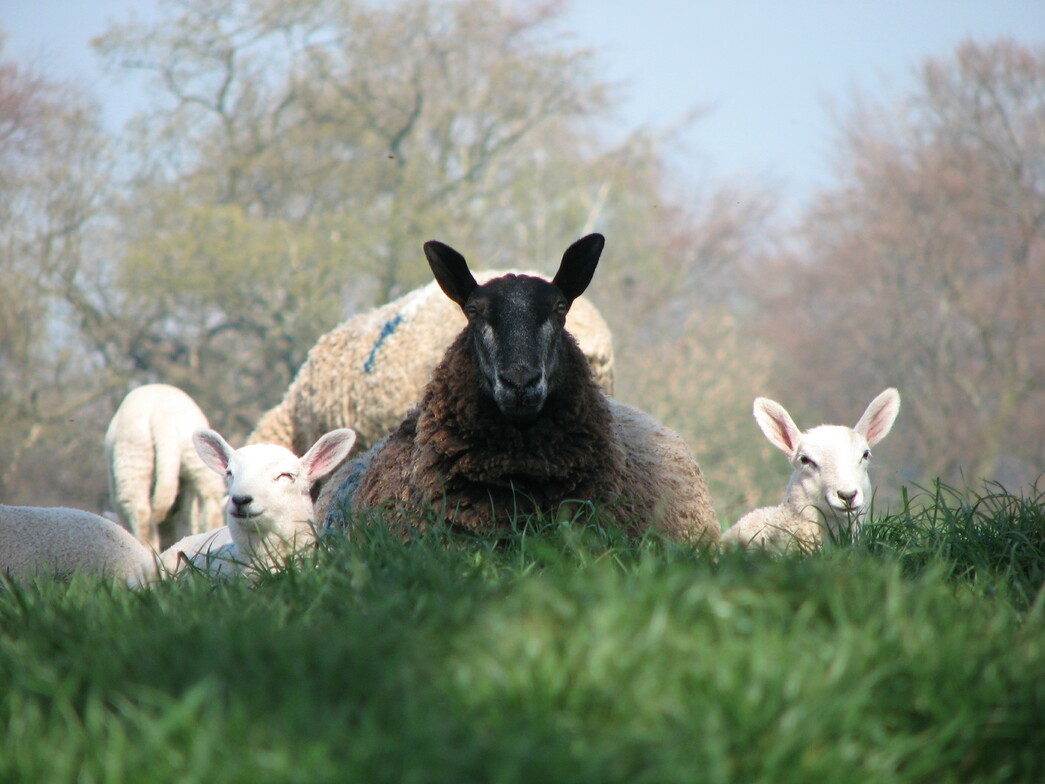
Way back in 1735, Carl Linnaeus, the Swedish biologist who developed our naming system for natural organisms, classified modern humans as homo sapiens — "wise or knowledgable man." In light of so many historical and current events, I will leave it to you to decide if that’s the best way to describe humanity. I can imagine good arguments for both sides!
I was thinking this week that another name for humankind might be homo mensurare - "measuring man." It seems that we are born to measure—and to be measured, starting at birth itself. Height, weight, Apgar score - it’s all noted down within minutes, and from there on it’s how many hours you slept, how many ounces of milk you drank, and precisely when you spoke your first word or took your first step.
As we grow older, our days become increasing filled with measurements - marks on the spelling test, number of sleeps until a birthday party, how many stars your holiday hotel got on TripAdvisor, how many inches our waist has grown or shrunk, how much money you need to retire. Our measurements can be as prosaic as setting a timer to brush our teeth for three minutes, or as poignant as contemplating the anticipated time we have left after a terminal medical prognosis.
As with any other tool in our kit, we can use this instinct for good or for ill. In today’s gospel, we are challenged to use our measuring superpower for the ultimate good - to continually discern how the values we live by measure up against the truth of God’s Word.
To what degree do the choices we make and the messages we trust reflect the guidance of the Good Shepherd? It’s a lens we can use when we read a political brochure, choose how to allocate our time, consider whether to support a housing initiative, decide where to spend our money, listen to an opinion podcast, or recount a family drama to a friend. If we don’t clearly recognize Jesus’s voice in how we act, think, work or play, or if we recognize it faintly or only occasionally, then it’s probably time to ask ourself whose voice it is we’re following.
It’s so very easy to let other voices take precedence in our thoughts, isn’t it? Voices that call us to measure our worth by our bank balance, professional standing, or appearance. Voices that call us to tribal, divisive ways of thinking that offer a false sense of belonging. Voices that lure us into thinking that true contentment will come with the purchase of a bigger car, or when your partner finally sees things your way. It’s so easy to forget our Sunday teachings in a Monday to Friday world.
Remaining true to Christ’s voice isn’t a matter of knowing your Bible by heart or following rigid rules. In his book, A More Christlike Word, Bradley Jerzak points out that the word "canon" did not originally refer to the authorized books included in the Bible, but the canon of faith - the good news of Christ’s life, death, and life beyond death. Measuring how well the various scriptures and writings from the early church aligned with this canon of faith determined if they would ultimately be included in the Bible. What made the cut was (and in some places, still is) a matter for debate, with the Roman Catholic church having 73 books in their Bible and many Protestant versions having only 66.
Remaining true to Christ’s voice, then, is found in measuring one’s life against the canon of faith—revealed in Scripture, but not just in Scripture, revealed in nature, but not just in nature, revealed in prayer, but not just in prayer. Revealed in solitude, but not just in solitude.
Today’s gospel of the Good Shepherd, in fact, reminds us that discerning Christ’s voice is not just a personal exercise but, more fruitfully, a collective one. I am struck that the word sheep can be used in the singular as well as the plural. While we trust that God accompanies the solo sheep on its path, it is within the flock of sheep that Christ’s love can be animated and shared.
I’ve brought along an illustration of the power of the flock. My grandson Jax and I planted an outdoor Easter garden at my home, and he was suitably amazed when, on that Sunday morning, the rock had been rolled away, the peg doll body was gone, and a newly robed peg doll Jesus was out in the garden with his followers. I took a few photos of it to share in the Good News Gazette the following week, and have some here.
As you may recall, I offered a "seek and find" game to go along with the photo in the newsletter. And since the kids shouldn’t have ALL the fun in our services, I wanted to invite a few folks up to play a version of that now. You can even bring a friend up if you like.
[ Five people come to the front, and each get a photo of the Easter Garden]
Are we all looking at the same thing? [Yes, the garden vista is the same, but from very marginally different angles]
Raise your hand if you can see:
- the open tomb?
- the white graveclothes
- the rooster that crowed when Peter betrayed Christ?
- three crosses
How many disciples are speaking with Christ in front of the tomb?
John and Peter are over on the right side, racing to the tomb. Who sees both men, and who sees just one?
[Some see more elements than others, no one sees all of them.]
Isn’t it something - we’re all looking at photos of the same thing, from largely the same angle. But it takes all of us to see the scene’s many aspects. Things that are hidden come to the light of day by even a slight shift of viewpoint or perspective.
I couldn’t believe how many photos I had to take until I got one that captured all the elements I wanted to use in the seek and find game. Every time I thought, surely THIS photo will have the rooster, and graveclothes, and all the disciples, etc etc, I would look at it and realize that now a leaf was obscuring Mary or one of the other main players. And once again I needed to bring in a new angle to try to capture the whole story. So thank goodness for the different depictions we read in the gospels, and thank goodness for a faith community like ours that together listens for Christ’s voice and discerns his guidance.
In reading up on my sheep facts for the children’s talk, I read on one website some other benefits that come with life in the flock:
By living in a group, sheep are able to keep more eyes and ears open for predators. A predator is less likely to attack a group of animals, but will instead go for stragglers that don’t rely as much on the social environment.
Sheep will feel safer with a group of other sheep or livestock animals. When you look at sheep out in a pasture, you may notice how close together all the animals tend to stay, even if they are grazing or resting. Sheep understand the concept that they are stronger together.
Today's gospel reading likened Christ’s followers to a herd of sheep wisely attentive to their Shepherd. Our first reading from the Book of Acts gives us an expanded recipe for life in Christian community. The early Christians "devoted themselves to the apostles’ teaching and fellowship, to the breaking of bread and the prayers." They pooled their resources. They opened themselves up to awe and wonder. They gathered often in the temple, and they ate together with "glad and generous hearts." I hope that we continue to build and offer this kind of flock at St. Clement’s, and that together we grow ever more capable of hearing Jesus’s voice above all the others in our lives.
I could end there, but the deacon in me can’t help but point out that in the gospel story, Jesus isn’t leading the sheep into safety in the sheepfold; he is leading them out the gate into the world, and to all the risks that it brings. We are all called to leave our places of safety and comfort and follow Christ into a world that needs us to be God’s love in thought, word and deed.
But we need not fear. Wherever we roam, the Lord is our shepherd. God’s mercy and goodness outlast every dark valley. And we are invited to dwell in the house of the Lord forever. Amen.