Being present ... even when you're not

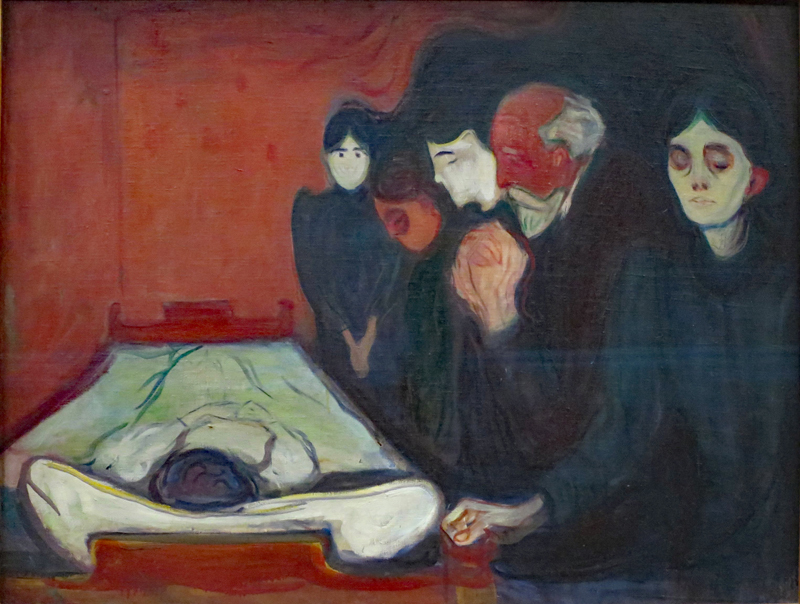
There is a vast richness in today’s scripture readings; in story and in metaphor we see the graveyard that is the natural result of our earthly ambitions contrasted with the everlasting life that is ours when we find our meaning and identity as a child of God.
But in reading today’s Gospel passage, there was one particular phrase that jumped out at me and wouldn’t let go. [ ] In that long reading, my mind kept returning to Martha and Mary each crying out to Jesus from their place in the story, "Lord, if you had been there, my brother would not have died."
We can imagine the range of emotions that might have rippled through their voices. Sorrow. Accusation. Anger. Hurt. Longing. Lingering hope, despite it all.
We have all felt like Martha and Mary at some point, feeling abandoned because God wasn’t there when help was most needed. But when I read the story this time around, my thoughts went in a different direction and it was the role of Jesus I resonated with. I could imagine Martha saying to me, "Peggy, if you had been here, my brother would not have died."
Does that mean I have a messiah complex? Well, maybe — but probably no more than most of us who carry various responsibilities in our homes, workplaces and communities. And I do know it’s not Martha’s voice I’m hearing, or anyone else’s. No, it’s that persistent, accusatory voice in my own head telling me that if I don’t reply to that email, donate that $20, visit that old friend, read that worthy book, take that course, attend that gathering, start that program, write that politician, deliver that meal, send that card - well, Martha’s brother might not die, but if I don’t get all those things done by sundown, bad things will definitely happen.
After all, we Christians are called to be the heart and hands of Christ in the world. When a deacon gives the dismissal at the end of a service, it’s our reminder that we are meant to be a tangible force for good, carrying God’s presence into the world. In other words, it’s our job to show up, especially when things feel urgent.
But in this gospel reading, Jesus doesn’t show up. At least, not when he "should" have. He didn’t drop everything and run to Bethany, as most of us would have tried to do in the same circumstances. Instead, Jesus chooses to trade the relief that his immediate presence at Lazarus’s bedside would have provided to his friends with the deferred but ultimately far more joyous celebration that took place two days later. And in the meantime he trusted that God would be there even when Jesus was not.
This reminded me of a question my spiritual director asked me years ago when I was unable to be with a friend who was ill. He looked at me and said something like, "Peggy, does the quality of your friendship depend on you being with them all the time?" His question gave me pause, and it gave me comfort. Because no, the rootedness of the relationship was such that physical distance could not diminish it.
We can all, I’m sure, think of people whose way of being in the world strengthens us even when they can’t be at our side. We remember how they navigated life’s challenges and apply those lessons to our own; perhaps just thinking of them brings feelings of steadiness or peace. Who are those people for you? It might be a past colleague at work. It might be a Sunday school teacher from your youth. If we’re lucky, one or more of our parents or grandparents is that unseen presence we carry with us. It can be a favourite author or thinker of any century whose words resonate with our deepest hopes and feelings.
Wouldn’t it be a marvellous thing to imagine we could be that person for someone else? To be so grounded in our journey that we pop into someone’s mind when they need a boost on their own?
But developing that lasting quality of steadfast presence may be not be the natural outcome of us running around madly trying to tick off a never-ending "Jobs for Jesus" list. Our good deeds may bring cheer and they may solve real problems, and that is not to be sneezed at or minimized. The last thing I want you to hear in this sermon is an invitation to drop all your vital church ministries and other commitments, believe me! But if we starve our own souls in the process, any positive impact we have will ultimately be thinner and more short-lived that it could be.
If, however, we are also deeply attentive to nourishing our spirit and growing in faith, Christ’s light within us will become steadier and brighter, warming even those people outside our direct circle of care. It won’t just be the friend you’re visiting in hospital who will benefit from your presence; it will be the people you smiled at in the elevator, the nurse you thanked for their efforts, the anxious couple you directed to the labour and delivery ward, and the person you let ahead of you in the coffee lineup because they were running late. Showing up in the world in this way might mean learning to withdraw from a world in which you push yourself to be as many things to as many people as you possibly can, as fast as you can. It means learning to walk as a pilgrim, making time to notice God at work around you and within you.
I recently read an article written by Ersun Kayra, a Christian man who lives with his wife and children in an apartment in Istanbul. His phone is always buzzing with requests for help; their spare bed is always in use; there are late-night knocks at the door from people who need to talk through their problems. What, he asks, does Christian hospitality look like when you are running on fumes yourself? He writes:
In our culture today, there are two prevailing scripts for how we should live with and care for other people.
One script says: Be available. Be there for your friends. Open your home. “Do life together.” In Christian circles, this often comes wrapped in beautiful terms: radical hospitality, Christlike compassion….Sometimes, if we are honest, it also comes with a heroic fantasy: I will be the one who always picks up, who always has a spare bed, who never turns anyone away.
The other script sounds very different. It speaks in a language we know as “therapy-speak”: bandwidth, emotional labor, toxic people, cutting off, self-care. It says: Protect yourself. Don’t let anyone drain you. This is not your responsibility. Say no. Set firm boundaries. Guard your energy.
If we are not careful, he says, this "therapy speak" can "harden around us like armour," and I think we can all see that dynamic at work in our culture.
But still, Kayra knows the wisdom of guarding one’s own wellbeing and in his Christian walk, he feels himself getting pulled between these two scripts. Surely, he thinks, there is a better way - and in the Gospels, Jesus shows us that indeed there is. Noticing the pattern of Jesus doing hands-on ministry and then firmly withdrawing for prayer and alone time, the author writes:
Jesus is not playing the hero who must be available to everyone, everywhere, all the time. Nor is he the carefully self-protective individual who guards his "bandwidth" above all. He is the Son whose yes and his no both pass through his relationship with the Father. His hospitality is not an endless series of emergency responses but a way of life that includes worship, the Sabbath, and genuine rest.
Rest is God’s gift to us and, as stated in the Ten Commandments, God’s expectation for us. We cannot become the person we were each uniquely created to be if we refuse to step away from our task-driven agendas long enough to tend to the needs of our soul.
We all have to figure out what real, restorative rest looks like in our lives. Although we might resort to crashing on the couch and binge-watching our favourite series on an evening off, that probably doesn’t bring the same refreshment and renewal as walking near the ocean, visiting a new coffee shop, or immersing ourselves in a hobby. Perhaps we are able to take ourselves away for a day or two, or more. However we restore ourselves, I hope it involves slowing down enough to deepen our conversation with God.
I am aware, too, that for some of us our challenge isn’t being over-engaged in the world, but under engaged. For all sorts of reasons, time may hang heavy on our hands and we aren’t sure where our interests lie or how to put our gifts to use. If that resonates with your experience, perhaps you can start by offering to help someone else with their load here and there. I am emerging from a particularly busy couple of months that in these last weeks have had the chaos of a home renovation added to the mix. I can’t tell you how appreciated it was when people in my various circles stepped forward and said, "here, let me take that off your plate for today." Is there someone in your life who could have a restful hour to themselves if you took just one modest task off their list?
There is another Mary and Martha story in the Bible; you’ll likely recall the one where Jesus comes over for a visit and Martha throws a fit because her sister Mary is leaving her with all the work while Mary sits at Jesus’s feet and soaks up his presence.
Perhaps it isn’t so much about what we’re doing; it’s the conviction we carry when we’re doing it. Whether we’re Martha busy baking brownies for Jesus, or Mary sitting at his feet; whether we’re dropping everything to visit a sick friend, or saying we’ll come in a couple of days, may our prayers, words and actions all echo Mary and Martha in proclaiming: Lord, as long as you are here, death will not win.
May that trust we nourish and carry within us be a real and present help to those around us, whether or not we are present ourselves. May we love God in a way that will be a living memory and lasting comfort for those we will one day leave behind. And as we turn our face to these last days of Lent, may God breathe new life into the dry bones of our spirit, and ready us for the joy that is to come. Amen.
***
Image:
| Munch, Edvard, 1863-1944. At the Deathbed, from Art in the Christian Tradition, a project of the Vanderbilt Divinity Library, Nashville, TN. https://diglib.library.vanderbilt.edu/act-imagelink.pl?RC=57311 [retrieved March 21, 2026]. Original source: https://commons.wikimedia.org/wiki/File:'At_the_Deathbed'_by_Edvard_Munch,_1895,_Bergen_Kunstmuseum.JPG. |