About the incarnation

My partner is an artist. Recently she’s been painting portraits. Just before Christmas, she finished a portrait of my mum’s service dog, and then a portrait of a friend’s father who sadly passed away this year much too soon.
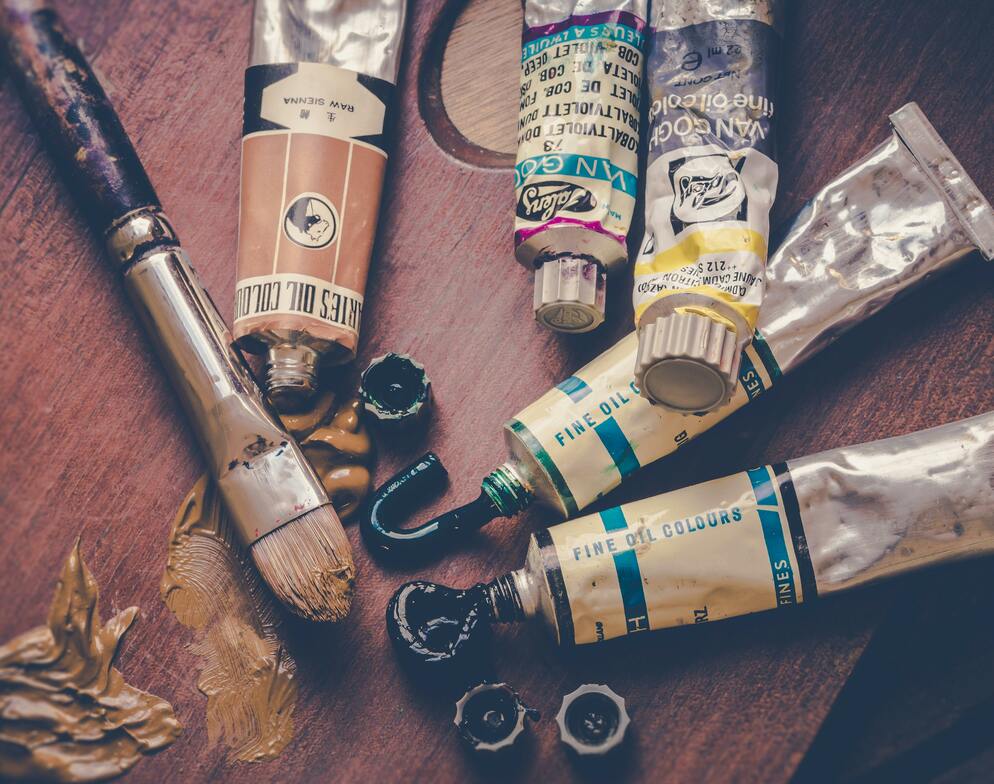
Initially, my partner had been using acrylic paint for these portraits. Every day, when I would come home and ask her how it was going, she would tell me how she had to start all over again because acrylic paint dries so quickly. When you’re doing something like a portrait, you need time to experiment and get things wrong before you get them right.
So, she switched to oils, which meant the paint was wet and muddy for days. She could come back to the canvas and work on what she had been trying out the day before without needing to start over again each time. Being the perfectionist that I think many artists are, she kept working on the paintings even on the day she was packing them in styrofoam to be shipped, crossing her fingers that the oils would dry by the time they reached their intended home.
The image of acrylic paint that dries as soon as it hits the canvas as opposed to oils which allow you to work them for days, this is for me a metaphor for the incarnation. Jesus’ birth wasn’t meaningful only in the moment that he came into the world, as though a portrait painted with acrylic. Jesus’s birth, like muddy oils, continues to transform the world even to this day.
The incarnation is the Christian belief that God became human in the person of Jesus Christ, who was both fully human and fully divine. Christian teachers and writers have been commenting on the incarnation for centuries. There’s a group of writers called mystics. In my opinion, they talk best about the incarnation. I’ll speak briefly about three of them this morning.
The great German mystic Hildegard of Bingen born in 1098 is remembered as a “polymath”, someone who had a great deal of knowledge about a great number of subjects. We know her for her hymns and Christian spiritual writings, but did you know she is considered to be the founder of scientific natural history in Germany?
When it comes to the incarnation, Hildegard of Bingen speaks of the ongoing nature of the incarnation, an event that’s been occurring since even the time of Eve. In her Antiphons, she famously wrote, somewhat tongue in cheek, “Because a woman instituted death; The clear Virgin has abolished it,” referencing the transforming work of the incarnation from Eve right through to Mary.
In her hymn “O Power of Eternity” she once again writes of all creation wrapped up in this ongoing incarnation— this time from the perspective of Adam.
“And through your word were all created/According to your will,” she writes.
“And then your very Word was clothed within/That form of flesh from Adam born./And so his garment/were washed and cleansed from greatest suffering./How great the Saviour’s goodness is!/For he has freed all things/By his own Incarnation,/Which divinity breathed forth/Unchained by any sin.”
Bernard of Clairvaux is another of the famous Christian mystics. He wrote in the medieval period. He was on track to become a knight when he gave it up to enter the monastery. In his sermons, he often wrote about how “in becoming incarnated in flesh . . . God took the human body so seriously as to become a human being himself.” He counsels that we therefore “should not despise our bodies.” Hm.
The final mystic I’d like to draw our attention to on this Christmas morning is Thomas Merton. Thomas Merton, more of a contemporary, was born in 1915 and died in 1968. Of the incarnation, he once wrote: “Christ is not simply the tip of the little finger of the Godhead, moving in the world, easily withdrawn, never threatened, never really risking anything. God has acted and given Himself totally, without division, in the Incarnation. He has become not only one of us, but even our very selves.”
God has become even our very selves, which means the incarnation we celebrate today in the birth of Jesus Christ is not only an historical moment fixed in time, but a reality that continues in and through us— even to this day, even in our time and place. The incarnation is not so much a singular event as though acrylic paint which dries instantly on a canvas, but a reality born in our world as often as our hearts beat, an incarnation which daily paints our muddy lives in the image of God. Amen.
Image source: Pexel free images