The power of our campfire story

Like some of you, perhaps, I have at times in my life wrestled with the words of the Christian creed - or creeds, I should say; the two authorized creeds we use in our services are the Apostles’ Creed and the longer Nicene Creed. Last year the Nicene Creed, which was hammered out at the Council of Nicaea in 325, turned 1,700 years old. The Apostles’ Creed is even older; while its precise date is not known, tradition holds that it was written by the 12 apostles in the earliest days of the church.
There is a lot packed into these creeds. Virgin births, Jesus’s descent into hell, the resurrection of the body (not just Jesus’s, but our own anticipated resurrection in the end of days), and eternal life. Given that bishops in Nicaea came to blows over some aspects of the creed, most particularly the divinity versus humanity of Jesus, it is hardly surprising we should still be wrestling with many of those concepts today. But, as noted by the Church of England in its online history of the Apostles’ Creed:
The Apostles’ Creed is … a summary of what the Church teaches, and of what Christians together believe, rather than a detailed statement of individual and personal belief. Saying the Creed binds Christians together as a believing community, across different traditions and practices. As we say the Creed, we join Christians past and present, and from all over the world, in proclaiming our common faith.
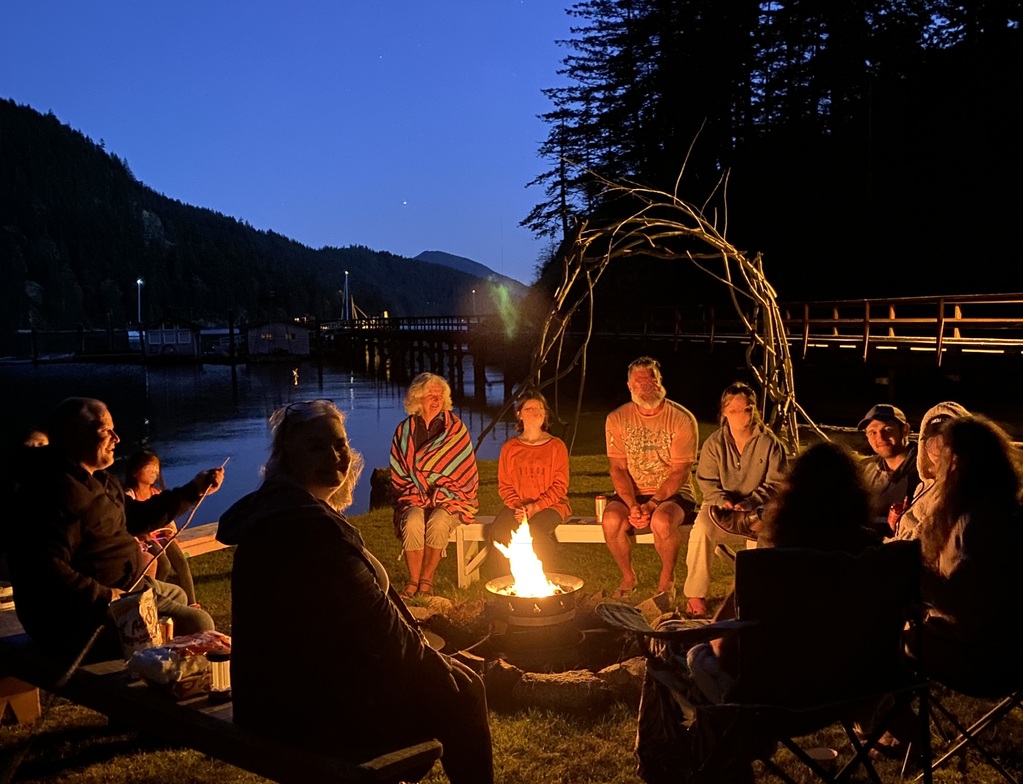
I have come to see the Creed not as a rigid checklist of belief, but as the campfire story that calls us into the warmth of community. It is the story that tells us where we belong, and to Whom we belong. It offers us a light that no darkness can extinguish, and ensures that we face any period of darkness within a fellowship of believers.
If I am confident about anything, it is that we won’t be met at the Pearly Gates by a multiple choice exam demanding we provide the correct answer to doctrinal statements. More important, I suspect, will be who we invited into our campfire circle, how we cared for those still outside it, and if we used our stories to instill fear or evoke love. Were our creeds and Biblical tales used to keep certain people out, or welcome all people in?
Taking one’s place within a great story of faith, and shaping one’s days around its deepest truths, is, I believe, foundational to a good life. For some decades now, our wider culture has preached that you can write your own story - that you can be your best self without any of the traditional underpinnings of ancient practice and belief. I think we are learning the hard way that a combination of religion rejected or, alternately, of religion misused have left too many people anxious, adrift and at the mercy of those who would throw them false lifelines. This is the time to be telling God’s story, and being God’s story in our everyday words and actions.
I am currently taking a course on multifaith chaplaincy, and in my reading and lectures I am hearing again and again that the more deeply rooted in, and nourished we are, by our own tradition, the more we tend to be curious and inspired by people of other faith in our neighbourhoods and around the world. We have the confidence and the heart to see God’s fingerprints woven throughout other traditions, while staying happily anchored in our own.
Last week, in the Gospel from John, we heard that "In the beginning was the Word, and the Word was with God, and the Word was God. He was in the beginning with God. All things came into being through him, and without him not one thing came into being."
If this is the case, we can trust that the Universal Christ, the light of the world through whom all things came into being, can be glimpsed in all creeds and cultures. At their baptism, Christians promise to seek, and to serve, Christ in all persons. Sharing our story, and listening with our whole heart to the stories of others, is one way of doing that.
Some of you may have heard of Niall Williams, whose book This is Happiness, has been popular over the past year or two. I recently read another of his books; simply called John, it is a story of the apostle John and his community in exile on the island of Patmos, and of their subsequent life in the city of Ephesus. It is an engaging read, and it gives us a sense of how the gospels came, eventually, to be written down and how, running parallel in the world, there are always people eager to twist a tale and turn it to their own ends.
When the tide of rationalism and empiricism swept over Europe beginning in the 15 and 1600s, the Bible was increasingly scrutinized to see what measured up as being "true," that is, accurate from a historical sense. Our gospels, our stories of faith, and our creeds, however, give us stories that are truer than true. They go beyond what can be weighed and measured and transport us into what is trusted and timeless.
Our world is ready to be re-enchanted by the power of story. Before it promptly sold out after its release this spring, a beautiful retelling of Galahad and the Holy Grail by English priest and bard Malcolm Guite quickly became the bestselling poetry book in the world, and was within the top 50 of all books being sold on Amazon.
Christianity Today magazine wrote: "Guite believes that the old stories about King Arthur and his knights still hold power—and ultimately point to hope in Jesus Christ." Guite is quoted as saying, “This story is about a light that wasn’t extinguished in the Dark Age. And we kind of need it again.”
“I think we want the real thing and the real deal,” he said. “We want deep nourishment of mind and soul and heart.”
I hope this summer you and I take rest in the world of stories that are truer than true. May our re-storying lead us to restoration; and may our campfire tales draw us ever closer into the heart of God and of God’s dream for the world. Amen.