God's chosen people: the poor

In a speech to the graduating class at Sarah Lawrence College in New York, the acclaimed author and Nobel Prize winner Toni Morrison once said: “Dream the world as it ought to be. Don’t let anybody, anybody convince you this is the way the world is and therefore must be. It must be the way it ought to be.”
Since time immemorial people have dreamed and been called to dream the world as it ought to be into existence. I would suggest that music in particular carries and communicates these dreams. Take for example two of the hymns we often sing at St. Clement’s on this Reign of Christ Sunday. Our opening hymn, Charles Wesley’s “Lo, He comes with clouds descending” speaks of Christ who comes in majesty. Thousands of saints “swell the triumph of his train” and at last, Christ claims the kingdom for his own. (I wonder who “his own” are? We’ll come back to that.)
In our closing hymn “Days of Elijah” we sing the words of Irish singer-songwriter Robin Mark: “Behold he comes/Riding on the clouds/Shining like the sun/At the trumpet call/Lift your voice/It’s the year of Jubilee/Out of Zion’s hill salvation comes.” Robin Mark wrote this song one night in 1994 while watching the news. Reports on the Rwandan genocide flashed across the screen alongside news of a ceasefire in Northern Ireland bringing to a halt more than 30 years of violence in what came to be known in that region as The Troubles. The world as it ought to be in Robin Mark’s imagination includes a saviour for every race and nation, and the salvation he describes in Days of Elijah is not primarily a personal salvation as we might expect with a Christian Evangelical praise song, but a global reign of justice for all of the oppressed places and all of the oppressed peoples of the world.
When Jesus describes what the reign of Christ will look like, when Jesus describes the world as he dreams it to be, he speaks of one called the Son of Man who comes in glory and is seated on a throne. All of the nations of the world gather before him and the first thing this Son of Man does is separate the righteous from the unrighteous. The scene Jesus describes is familiar to his listeners. It’s found in the Book of Ezekiel, which we read from this morning. In Ezekiel’s telling, the ruler is described as a shepherd who goes out and finds which among his sheep are injured and hungry and which have been injuring and stealing food from the rest of the flock. The shepherd then judges between the good sheep and the bad sheep and places one shepherd, King David as ruler of them all.
In Ezekiel, the story is told as a warning and as a message of hope for the nation of Israel during the Babylonian exile in 597 BCE. This includes those taken captive as well as those who remained in Judah and Jerusalem and the surrounding nations. Ezekiel proclaims that when God puts the world right, it will be the weak, not the strong who will be lifted up. Notice that in Ezekiel’s story, the ruler doesn’t separate sheep from goats as in Jesus’ telling, but sheep from sheep. In Ezekiel’s story, the ruler is separating people from within one nation. His message is a call to prioritize care for the weakest within your tribe. We know this tendency well, I think, the instinct to prioritize the strong over the weaker members, especially when we’re worried about preserving, carrying on the traditions and values of our communities, especially in the case of nations like biblical Israel or modern-day Palestine, where the genocide of a people from the land is a very real possibility. In the Hebrew scriptures it’s the weak, the little guy whom God uses to carry on a community’s legacy (think David and Goliath—or Moses).
Jesus’ telling of the Ezekiel story is different. All nations appear before the Son of Man, not just one nation but all nations. The ruler pulls sheep from every nation and places them at his right hand, and he separates not sheep from sheep, but sheep from goats. Why introduce a new category of animals in Jesus’ telling? Surely managing sheep was handful enough!
A bit of background: In the gospels, Jesus is often up against corrupt religious leaders who have set up a royal class of citizens among their own people, never mind among society at large. This royal class isn’t set apart because of their care for the poor or their calls for justice. They are set apart because of their collusion with empire, their access to power. When Jesus remixes this familiar story from Ezekiel in our gospel reading today, he is warning these religious authorities: Under the reign of Christ, the Son of Man will separate out the weak and injured sheep from the biblical nation of Israel and give them a seat at his right hand, just as it was prophesied in Ezekiel, but he will also pull out the weak and injured sheep from every race and nation and place them at his right hand, too. The elite who remain from whichever nation, expecting to be brought along for the ride merely because of their access to power, under Jesus’ reign they won’t even have the privilege of being called sheep.
“[D]o not think you can say to yourselves, ‘We have Abraham as our father.’” Jesus will say to the religious elite earlier in Matthew’s gospel. “I tell you that out of these stones God can raise up children for Abraham.”
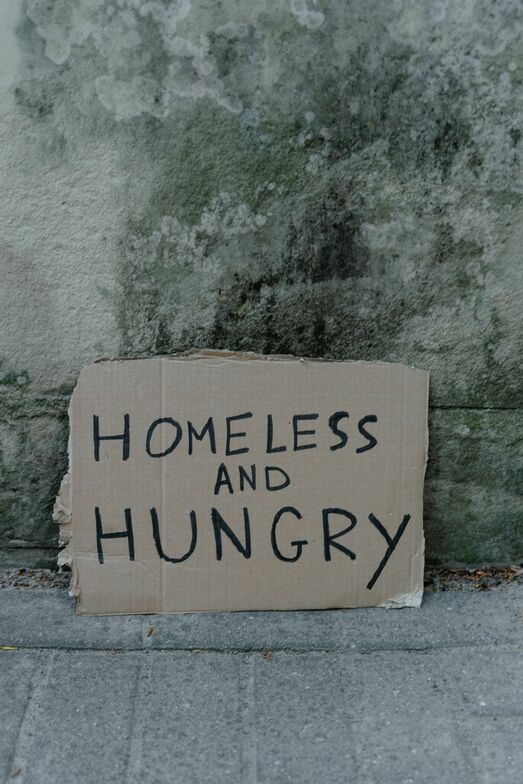
Jesus’s dream for the world as it ought to be is a sobering one for anyone who finds themselves with access to power. I would wager that that includes most of us living in the Western Christian world. Jesus’ message is sobering, but not without hope. Jesus leaves a roadmap to his kingdom: Look for the weak and the injured, they know the way. Jesus’ teaching on the sheep and the goats is clear: If God has a chosen people it is the poor. Period. It is not any one nation or religion or ethnicity. In Jesus’ dream for the world, those who get scooped up and set at God’s right hand are the homeless, the hungry, the imprisoned, and the sick, followed by those who see people living on the streets and house them, those who see famine and advocate for the redistribution of aid, those who see the illegally detained and petition for their release, those who see the sick and stop bombing their hospitals.
It strikes me that when it comes to imagining the world as it ought to be, Jesus has something to say for how we as Christians might relate in particular to religions different from our own. Recently, a speaker at a clergy education day for the Diocese of New Westminster pointed out commonalities within the Abrahamic faiths that for me brings home Jesus’ message from our gospel reading today. Did you know? Despite our tendency as Christians to prioritize shared Jewish-Christian heritage, when it comes to religious practice an observant Jew is more likely to feel at home in a Muslim household than in a Christian church. There is major overlap in Kosher and Halal dietary laws. Muslims pray for the descendents of Abraham in every one of their five daily prayers. Did you know? Muslims believe Jesus to be the Messiah, a belief shared with Christians.
Perhaps our faith traditions, our religions, our dreams as human beings for the world as it ought to be aren’t as particularized or atomized as we might think. Let us go then and rescue Christ’s own; let us go and follow the Way of the poor. Amen.
Photo credit: MART Productions, Pexel free imagesPhoto by MART PRODUCTION from Pexels: https://www.pexels.com/photo/cardboard-banner-8078379/Photo by MART PRODUCTION from Pexels: https://www.pexels.com/photo/cardboard-banner-8078379/