Gifts given and received

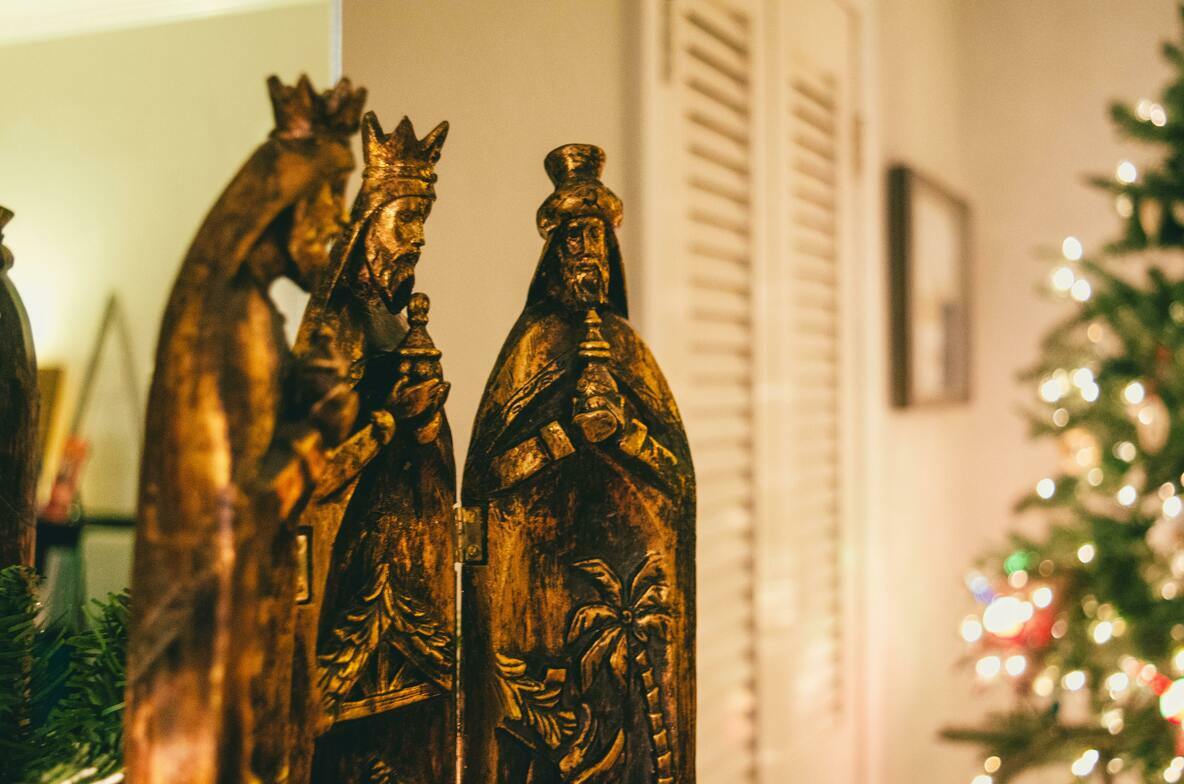
Much has been said about the magi. They could have been kings, astrologers, wise men, or priests from the Zoroastrian sect. There could have been three of them; there could have been a dozen. They followed a star and they brought gifts: gold, frankincense, and myrrh. Some speak favourably of the gifts: gold for a king, frankincense for a high priest, and myrrh the ointment for burials—a foreshadowing of Jesus’ death. Others say the magi ought to have brought much more practical gifts: a blanket for swaddling, something to make a fire—water so maybe Mary could’ve taken a nice warm bath?
Whatever gifts the magi brought to their visit with the Christ-child, and whatever we might think about them, one thing is clear: the gifts they gave paled in comparison to the gifts they received. If we follow the tradition of there being three gifts for three wise men, I’d like to suggest this morning that the wise men went away with: 1) the gift of reaching your intended destination; 2) the gift of being overwhelmed with joy; and 3) the gift of returning home another way.
1) The gift of reaching your intended destination
The word magi has its roots in Persian languages. It means “spiritual guide”. It is generally used to describe a clergy-like figure, though it needn’t be an ordained person. The closest example that comes to mind for me is a spiritual director, someone who is trained to offer a bit of a pathway when someone is trying to work out something God might be saying to them. You often find spiritual directors at retreats, at places like Rivendell. But you can find them in cities and towns, even in Lynn Valley, too. For a while now, Sandy Hwang, a spiritual director with Pacific Jubilee has been partnering with St Clement’s, offering one-on-one spiritual direction here. I know a number of you have really enjoyed meeting with Sandy.
As clergy, we are required to have a spiritual director. I think it’s a really good thing. One of the most influential spiritual direction sessions I ever had was when I was discerning whether or not to apply to St Clement’s. Up until that point, I had been serving primarily in assistant priest positions. From time to time, I would be called to step into a senior role, but it was only ever temporary and it came with, I suppose, the comfort knowing that at the end of the day the buck didn’t really stop with me. Ultimately, it was up to someone else if things went right—or, if they went terribly wrong!
Then, one day during a session with my spiritual director, we began to talk about the things that might be attractive about being “in charge” of a parish. Things like agency and autonomy: the freedom that comes with being able to set your own schedule! But, most of all, the thing that kept sticking out to me was the idea of servant leadership, that there really is a need in the world for “number 1’s”, for CEOs and rectors of parishes to lead in such a way as not to be served, but to serve. Kinda like Jesus. I remember thinking, that’s a model of leadership I respect. That’s a model of leadership I can get behind. That’s a model of leadership I’d like to learn.
I tell you that story because, what a gift it was to be sensing a call to something different, to then gain clarity over what that something different was, and then to actually get a chance to try that something different out. The magi follow a star sensing that they are called to find this newborn king, and they find him. The gift of reaching your intended destination.
2. The gift of being overwhelmed with joy
We have a saying in our household. It’s for when you’ve been smiling so hard your cheeks hurt. We call it ‘sugar tickles’. It’s a tingling sensation like after your foot’s fallen asleep, except it’s in your face. According to Reddit, sugar tickles is a legit neurological response, though it’s more commonly associated with the tingling feeling you get in the roof of your mouth when you’ve eaten something really sugary.
I wonder, when was the last time you smiled so hard your cheeks hurt? When was the last time you were overwhelmed with joy? When the magi see that the star had stopped over the place where the child was, they are overwhelmed with joy.
3. The gift of returning home another way
I was shocked and saddened yesterday, as I think many of us were, to wake up to the news that the U.S. had attacked Venezuela overnight and captured President Nicolás Maduro and his wife, Cilia Flores. Some are, of course, celebrating the news. Maduro was known for rigged elections, the latest in 2024, which was widely condemned by the opposition and international observers. Many others are speaking out against Saturday’s attack, calling it a “grave affront to Venezuela's sovereignty” and a violation of international law.
Jerry Pillay, the General Secretary for the World Council of Churches was one of the first to publish a response. He wrote this:
These actions set a dangerous precedent and example for others who seek to shrug off all constraints against the use of armed aggression and brute force to achieve political objectives.
The World Council of Churches calls urgently for the cessation of such attacks, for respect for the principles of international law and sovereignty of States, for the resolution of disputes through dialogue and diplomacy rather than by armed violence, and for the United Nations and the Organization of American States to take swift action to ensure all members respect the relevant charters and conventions. In these dangerous and uncertain times, the world needs wise and courageous leaders for peace, rather than the proliferation of conflicts and the normalization of international illegality risking a deeper descent into chaos.
There is another way, is what I hear Jerry Pillay saying. I think of refugees and migrants and asylum seekers and temporary foreign workers around the world who are desperate to return home, but to return home not by the way of violence or a deeper descent into chaos, but by peace. The magi could have gone home the way of Herod. They choose instead the gift of returning home another way.
As we contemplate the gifts given and received by the magi, and the star that started it all, I’ll leave you this Feast of the Epiphany with a poem from Jan Richardson. This is “How the Light Comes.”
How the Light Comes
I cannot tell you
how the light comes.
What I know
is that it is more ancient
than imagining.
That it travels
across an astounding expanse
to reach us.
That it loves
searching out
what is hidden
what is lost
what is forgotten
or in peril
or in pain.
That it has a fondness
for the body
for finding its way
toward flesh
for tracing the edges
of form
for shining forth
through the eye,
the hand,
the heart.
I cannot tell you
how the light comes,
but that it does.
That it will.
That it works its way
into the deepest dark
that enfolds you,
though it may seem
long ages in coming
or arrive in a shape
you did not foresee.
And so
may we this day
turn ourselves toward it.
May we lift our faces
to let it find us.
May we bend our bodies
to follow the arc it makes.
May we open
and open more
and open still
to the blessed light
that comes.
Amen.
Image source: Pexel free images